
Skip to content
Burhan Curriculum

For Islamic schools and homeschool families

88 student books, 36 of them named readers

Every subject, taught from inside the Islamic worldview

The Burhan Curriculum is written in house at Burhan Academy in Elgin, Illinois. It treats revelation and reason as one body of knowledge, so students learn each subject as part of a single picture of the world.

Units across Language Arts and Social Studies
52
Student books, readers and workbooks
88
Named readers in the library
36
Teacher Guides, one for every unit
52
  • English Language Arts: 76 student books finished, and around 84 more to go for Grades 6 to 12.
  • Social Studies: 12 student books finished, and around 66 more to go for Kindergarten to Grade 3 and Grades 6 to 12.

Language Arts · Kindergarten to Grade 5

Language Arts taught from inside the faith

Every unit is built around a full length reader written for it, with a Discovery Workbook, a Teacher Edition, and assessments drawn from the same story. Aligned to the Common Core State Standards.

Preview the books

Why Burhan

Ideas children absorb long before they can name them

Every curriculum carries a view of what a person is, what is true, and what life is for. We see six of those views running through most modern classrooms. Here is how each one reaches a child, and what Burhan teaches in its place.

  • Individualism

    The belief that the individual comes first, and that duties to family and community come second.

    How it shapes a child

    A child learns to ask what they want before they ask what they owe. Parents become people to negotiate with, and the community becomes something to join or leave as it suits them.

    What Burhan teaches instead

    Characters grow through duties they keep to parents, neighbors, teachers, and community. Stories show a child finding their place inside a family, not apart from it.

    Opposite: Collectivism

  • Nihilism

    The belief that life has no built in meaning or purpose.

    How it shapes a child

    A child who hears that nothing matters beyond what feels good has little reason to keep working when it gets hard, to keep a promise when it costs, or to hope when things go wrong. Boredom and cynicism take the place of purpose.

    What Burhan teaches instead

    Tawhid gives every lesson a purpose. The world is created, ordered, and meaningful, and a person was made to know and serve their Creator.

    Opposite: Realism

  • Subjectivism

    The belief that truth is whatever each person feels or decides it is.

    How it shapes a child

    A child learns that an argument ends at "that is just your opinion." Evidence stops mattering, right and wrong become matters of taste, and it gets hard to tell a fact from a feeling.

    What Burhan teaches instead

    Students weigh evidence, name their sources, and learn how far a report stands from the event. Islamic scholarship counts as evidence, and moral truth is not put to a vote.

    Opposite: Objectivism

  • Relativism

    The belief that right and wrong change with the place, the group, or the moment, so no one standard holds for everyone.

    How it shapes a child

    A child learns to say "that is true for you, not for me" and stop there. Honesty, modesty, and mercy start to look like local habits that can be swapped out, so there is little reason to hold to them when they cost something.

    What Burhan teaches instead

    Characters keep to honesty and adab when the people around them do not, and the lessons say where each standard comes from. Students learn how other people see things without treating every view as equally true.

    Opposite: Objectivism

  • Progressivism

    The belief that newer always means better, so older ideas are outgrown and can be set aside.

    How it shapes a child

    A child learns to treat the past as a rough draft that the present has already fixed. Elders, old books, and scholars of earlier centuries start to look like things to move past, and the child cannot tell whether a claim is true or only recent.

    What Burhan teaches instead

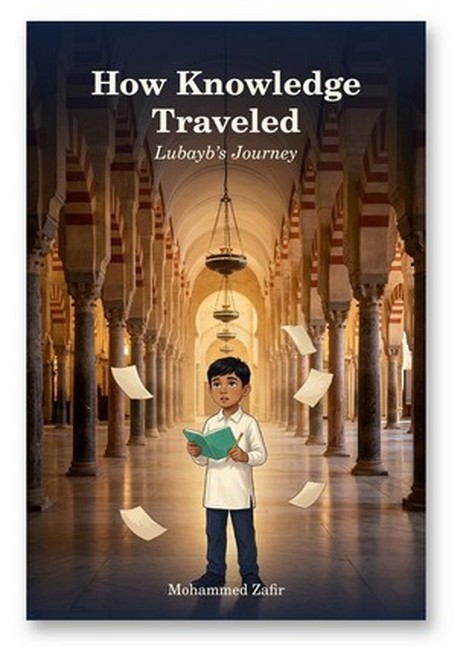
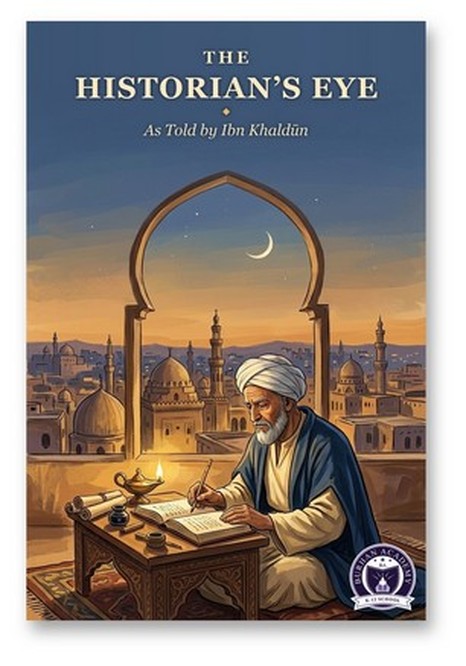
    Students read scholars of earlier centuries as sources, not relics. In The Historian's Eye, Ibn Khaldun weighs each report, and in How Knowledge Traveled the Shaykh names the older work from Mesopotamia, Egypt, Greece, India, Persia, and China that Muslim scholars built on.

    Opposite: Realism

  • Presentism

    The habit of judging the past only by today's standards.

    How it shapes a child

    A child learns to look at people of earlier centuries and see only what they got wrong by modern lights. Whole periods get written off, and the child never asks what a source could know or what the people of that time were facing.

    What Burhan teaches instead

    Students ask who wrote a report, when they wrote it, and what they could know, the habit hadith scholars called weighing the isnad. Events are read in their own time, while right and wrong rest on a standard that does not change with the century.

    Opposite: Objectivism

What we build in their place

Three ideas stand opposite the six above. Each runs through the readers, the workbooks, and the way a teacher is asked to teach.

  • Collectivism

    Answers individualism

    A sense of shared responsibility to family and community. Students grow through the duties they keep to parents, neighbors, and teachers, and see themselves as part of something larger than themselves.

    Here the word means duty to others, not the loss of the individual.

  • Realism

    Answers nihilism and progressivism

    The world is real, created, ordered, and knowable. Students learn the sciences as one body of knowledge, received through revelation and enriched by reasoning, and carried forward by each generation instead of replaced.

    Here the word means the world is real and has a purpose.

  • Objectivism

    Answers subjectivism, relativism, and presentism

    The habit of measuring right and wrong against a standard outside oneself. Truth does not depend on who is speaking, which group they belong to, or which century it is.

    Here the word means truth that stands outside opinion, not a modern school of thought.

The wider picture

What is being taught in the classrooms around the world?

Look at what children are taught today and two patterns are common. Burhan is a third.

  • In many secular classrooms

    The frame is secular, and it is treated as neutral. The ideas above sit underneath the reading lists, the class rules, and what counts as a good answer, so children take them in without being told they are ideas.

  • In many Islamic schools

    The secular program stays as it is, and Islam is added around it: a hadith in a sidebar, a Ramadan story in December, an Islamic studies period at the end of the day. The frame underneath does not change.

  • In Burhan classrooms

    The lessons start from tawhid, adab, and the Qur'an's picture of the world. Reading and writing skills grow out of that ground, and revelation and reason are taught as one body of knowledge.

Most curricula start secularand add Islam at the edges.We start from the other end.

The program

What changes in your classrooms

Instead of a secular reading program with Islamic extras, every book, workbook, and guide is written from within the faith.

  • Faith is the ground, not the sidebar

    Tawhid, adab, and the Qur'an's picture of the world are where each lesson starts. Reading and writing skills grow out of that ground, instead of Islam being added at the edges of a secular program.

  • One story drives the whole unit

    Vocabulary, grammar, and writing come out of the reader students are already inside. There is no separate grammar track competing for time.

  • Teachers find every page from the lesson

    The Teacher's Guide cites the same page codes as the Discovery Workbook, with answer keys, pacing, and an Islamic Connection.

  • Standards your board will ask about

    Readers and Discovery Workbooks are aligned to the Common Core State Standards, and every Grade 1 to 5 unit sits inside an IB PYP theme.

  • Sources children can trust

    Islamic scholarship counts as evidence, reports are traced to the work and the transmitter, and no page number or quotation is ever invented.

Inside a unit

Four parts, one story

Grades 1 to 5 each run six units, and every unit has the same four parts. Kindergarten runs its own ten unit phonics and comprehension sequence, with a reader and a workbook in each unit.

  1. 01

    Reader

    An illustrated book written for the unit. Upper grade readers are 6 by 9 inches, and read aloud picture books are 8 by 10.

  2. 02

    Student Discovery Workbook

    Comprehension, vocabulary, grammar, and writing, sequenced with the chapters of the reader.

  3. 03

    Teacher Edition

    Answer keys, pacing, and an Islamic Connection, with page codes that match the workbook.

  4. 04

    Assessments

    Everything from exit tickets to a final writing project.

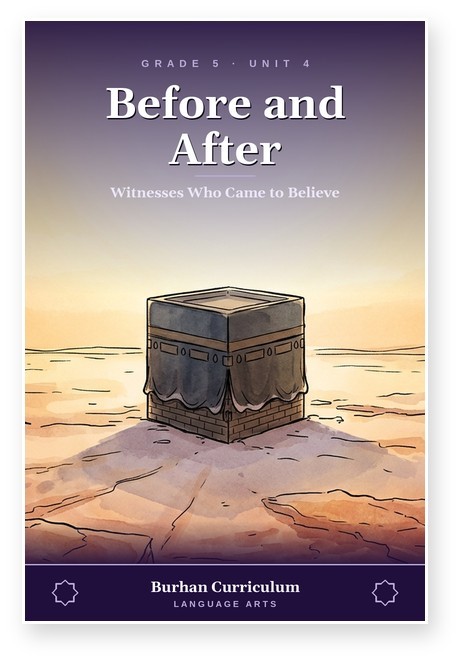
Cover of How Knowledge Traveled

Example unit

How Knowledge Traveled

Grade 4, Unit 2

Genre
Informational, told in five text structures
IB PYP theme
Who We Are
Skills drawn from the reader
Text structure, main idea, adjective order and commas, and an expository essay
Components
ReaderDiscovery WorkbookTeacher EditionAssessments

The readers

Thirty six readers, each written for its unit

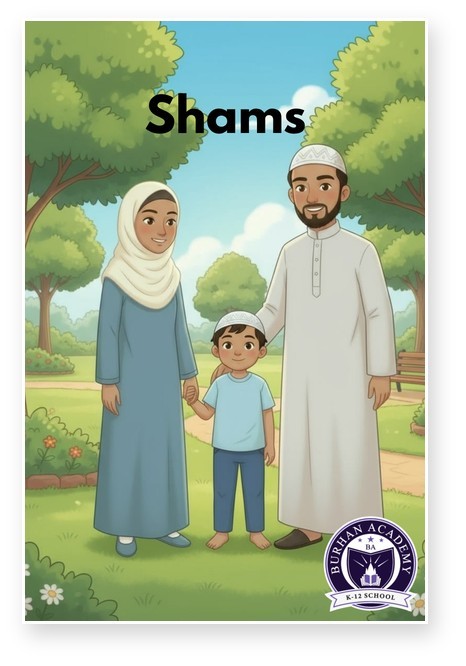
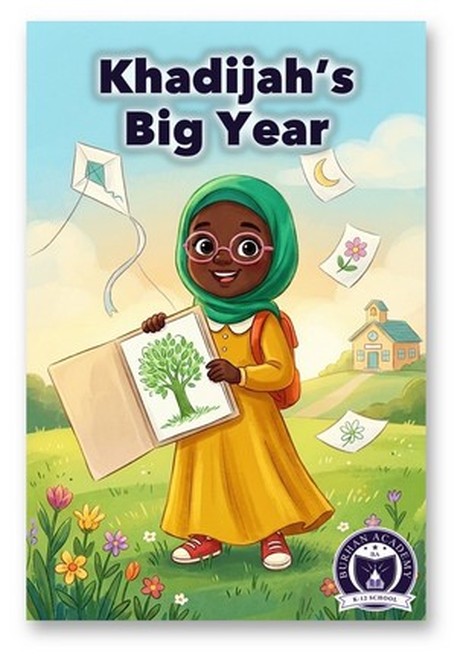
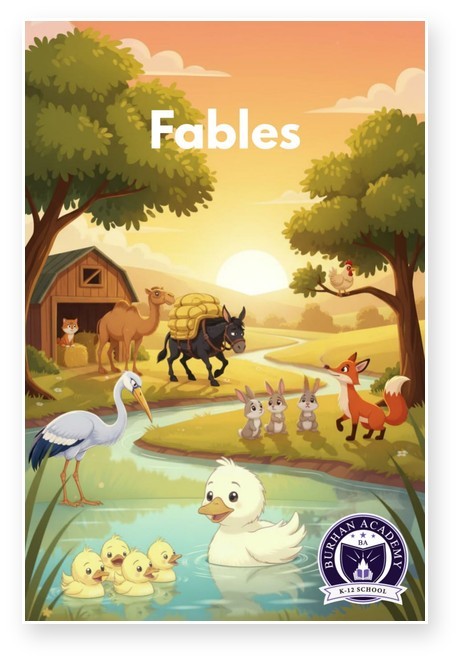
Realistic fiction, fables, poetry, a verse novel, narrative nonfiction, and historical fiction. Students meet point of view as a craft, not a single rule.

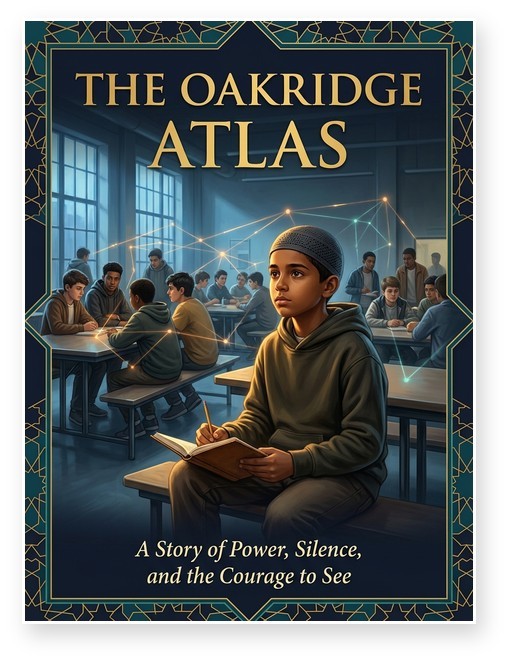
One reader is narrated by a boy mapping the power at his school, another by Ibn Khaldun weighing a source, another moves in verse, and another is plain informational nonfiction.
From how we write, Burhan Curriculum
Access full library

Every reader in the library, filterable by grade, department, and type.

Samples

Read before you decide

Download a sampler, or open real pages from the books below.

  • Curriculum overview

    A magazine style overview of the whole Burhan Curriculum: its philosophy, its departments, and how the books work together.

    Coming soonDownload the Language Arts sampler in the meantime.
  • Language Arts sampler

    Our philosophy, the program overview, and real pages from the readers, workbooks, and Teacher's Guide. Kindergarten to Grade 5.

    PDF, 48 pages

Look inside the books

Open any page to see it full size. These are real pages from the readers and Student Discovery Workbooks.

Real pages from five of the readers, one from each stage of the program.

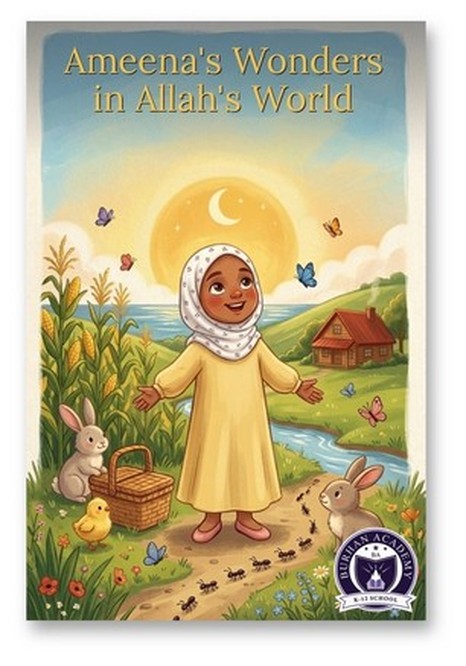
Ameena's Wonders in Allah's World

Grade 1, Unit 6

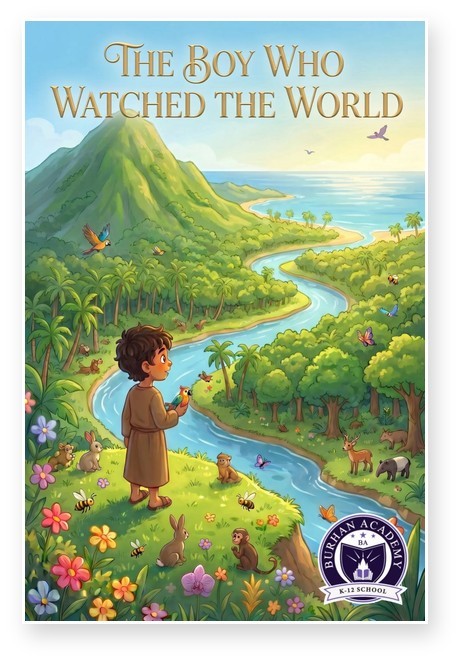
The Boy Who Watched the World

Grade 2, Unit 6

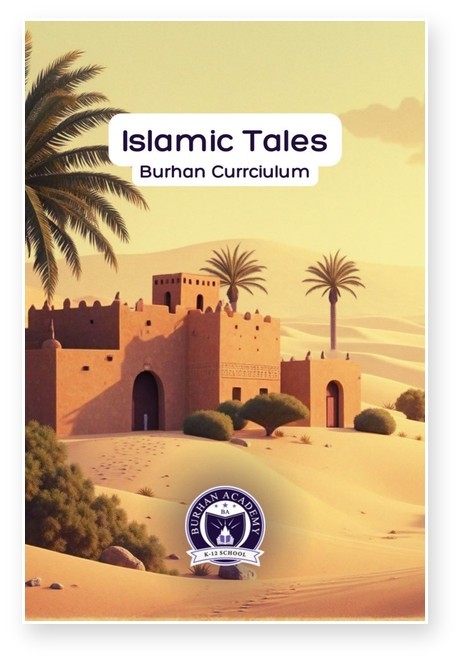
Islamic Tales

Grade 3, Unit 1

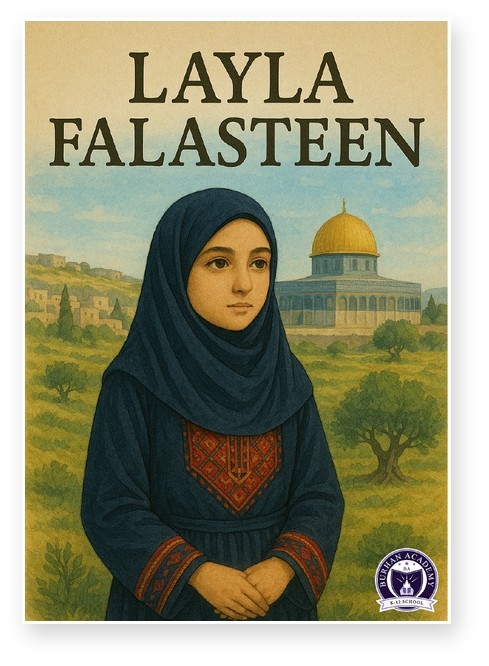
Layla Falasteen

Grade 4, Unit 6, a reader in verse

The Historian's Eye

Grade 5, Unit 5, as told by Ibn Khaldūn

Every page shown is taken from the Language Arts sampler.

Where Burhan is going

Every subject, Kindergarten to Grade 12

We are building the curriculum one subject at a time, in this order: English Language Arts, Social Studies, Science, then Math. Language Arts is complete for Kindergarten to Grade 5, and Social Studies is complete for Grades 4 and 5.

  1. English Language Arts

    Complete for Kindergarten to Grade 5

    76 student books done (36 readers and 40 workbooks) and 40 Teacher Guides. 7 grades to go.

    • K
    • 1
    • 2
    • 3
    • 4
    • 5
    • 6
    • 7
    • 8
    • 9
    • 10
    • 11
    • 12
  2. Social Studies

    Complete for Grades 4 and 5

    12 workbooks and 12 Teacher Guides done. 11 grades to go.

    • K
    • 1
    • 2
    • 3
    • 4
    • 5
    • 6
    • 7
    • 8
    • 9
    • 10
    • 11
    • 12
  3. Science

    Planned

    No books done yet. 13 grades to go.

    • K
    • 1
    • 2
    • 3
    • 4
    • 5
    • 6
    • 7
    • 8
    • 9
    • 10
    • 11
    • 12
  4. Math

    Planned

    No books done yet. 13 grades to go.

    • K
    • 1
    • 2
    • 3
    • 4
    • 5
    • 6
    • 7
    • 8
    • 9
    • 10
    • 11
    • 12

Complete

Planned

K is Kindergarten.

Who is on the team

The scholars and educators behind the books

The Burhan Curriculum is written in house at Burhan Academy in Elgin, Illinois, by Islamic scholars and working educators.

Meet the full team

Leadership

  • Dr. Mufti Yasir Nadeem al-Wajidi

    President & Founder

    A scholar, philosopher, and educator with a Ph.D. in ḥadīth authentication and over two decades of teaching.

  • Dr. Hamid Nazeer

    Vice President

    A board-certified Interventional and Diagnostic Radiologist with over ten years of experience.

  • Dr. Ashraf Arafat

    Principal

    Principal of Burhan Academy, with a doctoral thesis on Islamic curricula and school development.

Curriculum team

  • Shaykh Muhammad Bilal

    Project Lead / Head of Curriculum

    A graduate of Jamia Darul Uloom Karachi who reframes education through an Islamic intellectual lens.

  • Shaykh Ali Toft

    Curriculum Editor

    A Hafiz of the Qur’an with a Master’s in Education from Harvard and over a decade of teaching.

  • Dr. Zoaib Mirza

    Curriculum Specialist

    An award winning education leader with a Ph.D. in Educational Leadership and two decades of curriculum work.

  • Heba Gaafer

    IB Coordinator

    Over 12 years of teaching across American, International Baccalaureate, and British school systems.

How it works

From first look to first unit

  1. 1

    Download the sampler

    Tell us who you are and the PDF downloads right away. It takes about a minute.

  2. 2

    Review it with your team

    Read the books, look at how the units are built, and check the alignment against what your school needs.

  3. 3

    Plan your first grades

    Talk with the curriculum team that wrote the books about which grades and units to start with.

Our standards

Rules every book is held to

Twelve editorial, research, and representation standards govern the whole library. Four of them:

Read all twelve standards
  • Evidence

    Islamic tradition and scholarship is itself a form of evidence throughout our books.

  • Isnad applied to history

    Name the work and the transmitter, and tell the reader how far the report stands from the event.

  • Citation honesty

    Never invent a page number, ISBN, publisher, year, or quotation.

  • Character in fiction

    A child protagonist does not obtain evidence by trespass, theft, or spying, and does not deceive or go around his parents.

Questions

What schools ask us

Have a question that is not here? Send it with your sampler download and the curriculum team will answer it.

Which grades does the program cover?

Kindergarten through Grade 5. Grades 1 to 5 each run six units, and each unit is built around one reader written for it. Kindergarten runs its own ten unit phonics and comprehension sequence with decodable and sight word readers.

What comes in a unit?

Four parts. The Reader, an illustrated book. The Student Discovery Workbook, with comprehension, vocabulary, grammar, and writing sequenced with the chapters. The Teacher Edition, with answer keys, pacing, and an Islamic Connection. And Assessments, from exit tickets to a final writing project. Kindergarten units pair a reader with a workbook.

Is it aligned to the Common Core?

Yes. The readers and Discovery Workbooks are aligned to the Common Core State Standards, and every unit has its own Teacher's Guide. The Teacher's Guide cites the same page codes as the workbook, so a teacher can find each page straight from the lesson.

Does it connect to the IB Primary Years Programme?

Each Grade 1 to 5 unit sits inside one of the IB PYP transdisciplinary themes, such as Who We Are, How the World Works, or Sharing the Planet.

How is Islam part of the lessons?

It is the starting point, not an add on. Tawhid, adab, and the Qur'an's picture of the world are the ground the lessons stand on. Adab lives inside the story rather than in a sidebar, and Islamic scholarship is treated as evidence.

Are grammar and vocabulary taught on a separate track?

No. Students read the full reader first, and the vocabulary, grammar, and writing are drawn from that reader. Language study comes out of the story.

What do the books look like?

Upper grade readers are 6 by 9 inches, and read aloud picture books are 8 by 10. Illustrated people are Muslim, in modest dress, and historical figures may appear in period dress.

How do you handle sources and history?

We name the work and the transmitter and tell the reader how far a report stands from the event. We never invent a page number, ISBN, publisher, year, or quotation. A missing citation is acceptable. A fabricated one is not.

Who writes the curriculum?

The Burhan Curriculum is written in house at Burhan Academy, a K to 12 Islamic school in Elgin, Illinois.

Can I read the site in another language?

Yes. Open the language menu in the navigation and choose Arabic, Urdu, or Turkish. The page is translated by machine through Google Translate, so the wording may differ from the English original.

Is Social Studies available?

Grades 4 and 5 are complete, with six units per grade, built on an Islamic epistemological framework that is compatible with the C3 Framework. The remaining grades are in progress.

Will the curriculum go beyond Grade 5?

Yes. We plan to extend it through Grade 12, one subject at a time, in this order: English Language Arts, Social Studies, Science, then Math. Today Language Arts is complete for Kindergarten to Grade 5, and Social Studies is complete for Grades 4 and 5.

Download the sampler

See the books before you decide

Tell us about your school and the grades you are considering. The sampler downloads right away, and the curriculum team will follow up to answer your questions.

  • No obligation to adopt
  • Ask about any grade, Kindergarten to Grade 5
  • Answers from the team that wrote the books
Grades you are considering

Submitting downloads the sampler and shares your details with the curriculum team.

The Epistemic Reorientation campaign

Help us finish the Burhan Curriculum

Every donation fuels the creation of transformative curricula and resources that inspire, educate, and empower the next generation of Muslim youth. Language Arts and Social Studies are underway, and Science and Math come next.

Donations are made on a secure page hosted by Masjidal.